Another needed break from dissenting is in order. One must keep their brain fresh to keep fighting and that means obsessing about something else for a change. Today I will write about my favorite artist. If you would have asked me when I was undergraduate who my favorite artist was, I would have laughed at you. I was never into art as a child or young adult. Creating visual art has never been a pastime I have enjoyed. I was lousy at it in school despite having a great teacher. I kind of dismissed all of the wonderful art I experienced in my musical history studies. I just didn’t seem to understand or appreciate the connections that visual and musical arts have. Until one day during my first ever trip to the St. Louis Art Museum in 1993 with a teaching colleague I had a painting make an impression on me like no other painting had before.
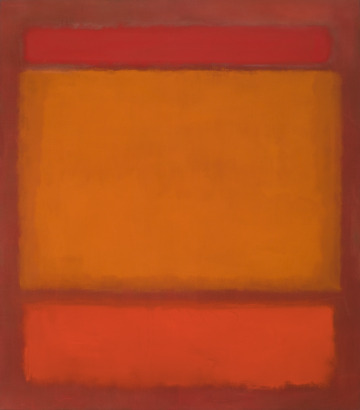
I was actually looking at an impressive sculpture of twisted metal and broken glass that made a slight impression when I noticed this bright color on my left. It startled me at first. Why was this bright piece of orange here amongst these dark modern pieces of art? I stood there about eight feet in front of it trying to size it up visually,.. but… It was a strange experience, I actually felt like I was hearing the painting. A bright shimmering “A” major 7th chord one would hear in a Bartok string piece. I finally walked closer to the piece until I was about two and half feet from it. My head was just above the red rectangle on the bottom. I could see the layers of brushstrokes. There were multiple-dimensions that were perceptible. It drew me in like no other piece of art had ever done for me. My teaching colleague and friend came up to me and asked me if I could hear it? I said yes, and then a docent abruptly asked me to step back.
Never in my wildest dreams would I have ever had a piece of art affect me so profoundly. I have come to learn that my close viewing of the painting was what Rothko intended his viewers to stand. He wanted his viewers to experience his color-field portraits as honestly and as innocently as possible. He had little use for artistic jargon to describe his paintings. His application of paint was light, and the layering was purposeful. The mixture of colors (wet on wet) was intentional. He wanted the colors to blend. The experience was intended to be soulful. I have since searched out more Rothko pieces at museums around the country, and I am never disappointed.
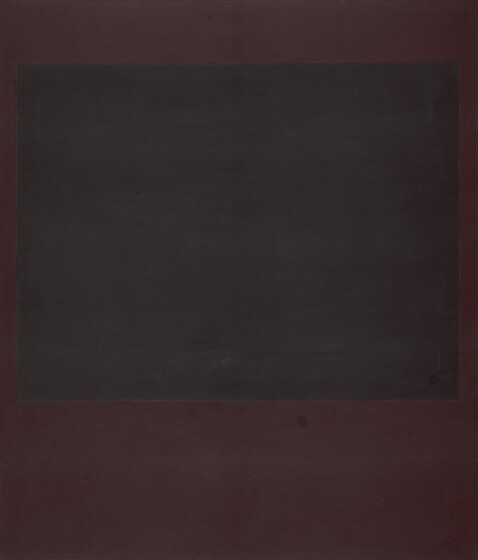
I’ve been back to St. Louis a few times, and I share Orange on Red with friends and family. I even tried to explain why I liked it to my children. They just saw rectangles and squares. They didn’t feel the universe that awaited discovery in the depths of the colors. How is it that I could see this, but others can’t? What separates my perception apart from others? Is it the appreciation of the process? Is it a shared perception with Rothko? I don’t really know. I don’t want to know too much for fear the next Rothko I see in person will leave me going eh… but…
I have been reading biographies and scholarly articles on Rothko as of late. I can’t help it, curiosity and knowledge are my achilles heel. I like to learn, and exploring the life and artistic processes of Rothko are a healthy alternative to the darkness of politics and policy I have research over 15 years. Rothko was a Latvian Jew and at the age of ten he arrived in the United States with his parents. They settled in Oregon. In 1937 Rothko became an American citizen at the age of 35 and because of anti-semitism of the time he shortened his name to Rothko from Rothkowitz. He taught elementary children art for most of his career. He was survived by three children and his ex-wife. Rothko smoked heavily, drank excessively, and suffered from depression and an aneurysm before taking his life at the age of 66 in 1970. His development as an artist evolved from impressionism, surrealism, abstract expressionism, until settling into his multiform color fields. Keep in mind, I’m a musician, so if any of my terminology is sloppy my apologies.
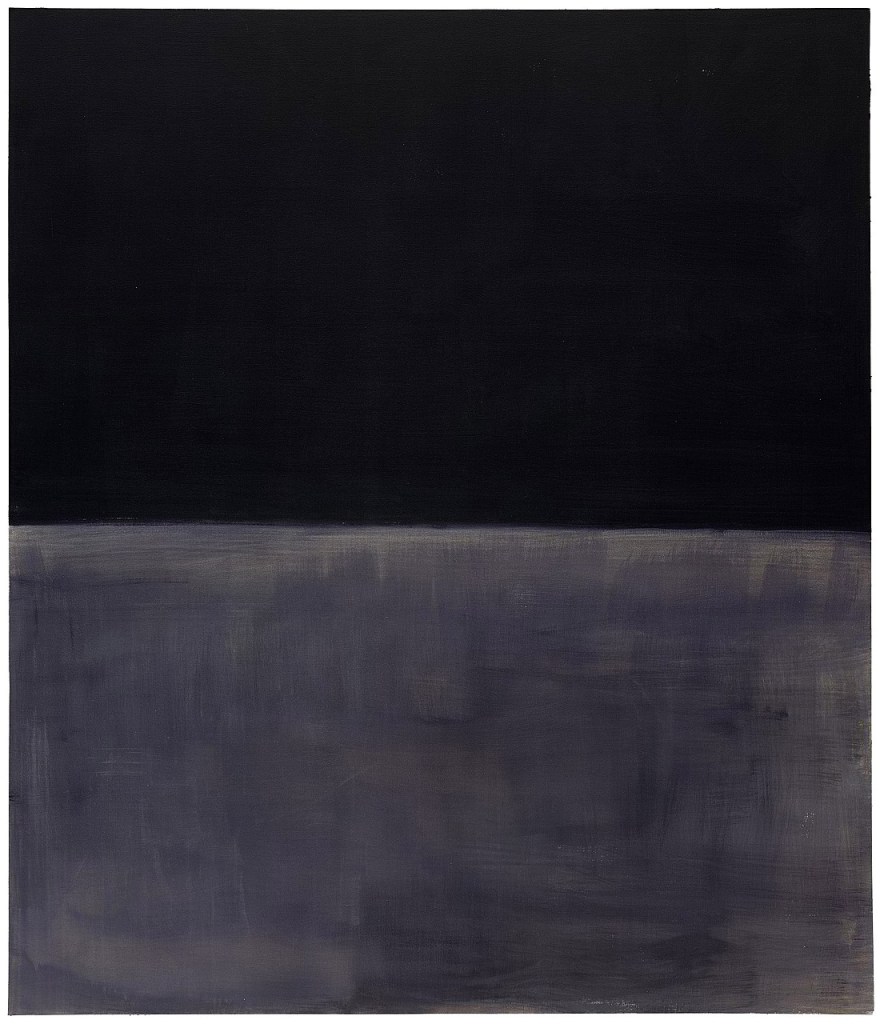
The more I learn about Rothko, the more I want to know. Now if only I was Space Pirate rich I could have a couple of portraits in my home. The one thing I have picked up is that Rothko’s artistic process on his color fields portraits is as artistically derived as the product that was created by this process. Everything he did had purpose, drive, and goal. You can see it in the brush strokes, and how he uses light to manipulate the perception of the viewer. This whole process comes to an epic climax with the Rothko Chapel commission in Houston, TX. The chapel includes numerous dark color field portraits in a non-denominational building that he had a hand in designing with the architect. The commission by John and Dominique de Menil includes 14 large color fields displayed in the octagon space with the hopes of creating a meditative space. The Rothko Chapel did not open until after Rothko’s death, but the canvases were finished years before and sat in storage until the chapels completion.
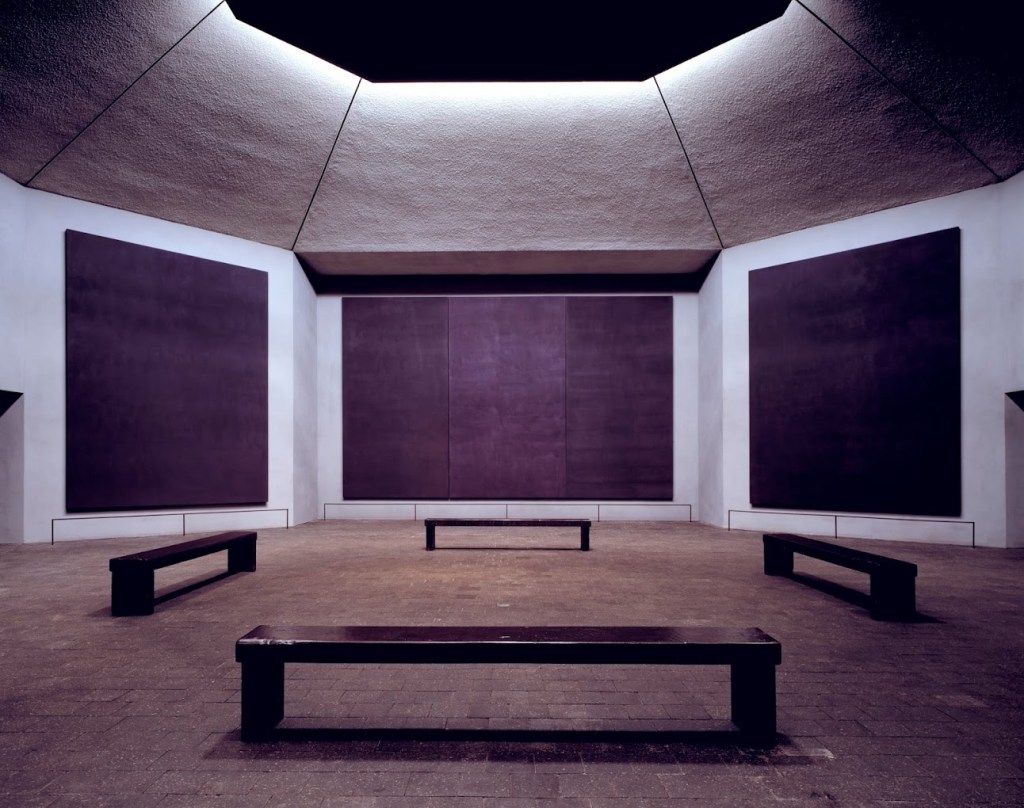
My goal in the next few years is to go to Houston with my wife to see the Rothko Chapel, and hopefully hit an Astros game while we’re at it. Just looking at the photo of these canvases elicits an emotional response for me. I can only imagine what it will be like when I am seated on one of those benches staring into their abyss. How will this journey move my spiritual perceptions? Who knows, I am just looking forward to that adventure as I do every adventure that has a Rothko involved. His work moves my spirit. It envelopes my consciousness. I hear his art like a musical composition… If that makes me weird, then that is just fine by me. You can have Van Gogh, Matisse, Renoir, or Michelangelo. I will take Mark Rothko every time… so it goes…
 I Dissent (and other ramblings)
Leave a comment